Insights / Cyber Library
An Introduction to Privacy for Technology Professionals
A dense, exam-grade reference built for IAPP certification that bridges cybersecurity, privacy, and AI.
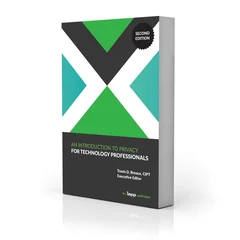
An Introduction to Privacy for Technology Professionals was built for one exam: the IAPP Certified Information Privacy Technologist credential. That narrow origin is exactly what makes it useful for a much wider audience. It looks at every cybersecurity domain through a privacy lens. That approach bridges a gap most cybersecurity textbooks and most popular privacy books both leave open.
Executive editor Travis Breaux directs the Requirements Engineering Laboratory at Carnegie Mellon University and holds a PhD in computer science from North Carolina State. He assembled eleven contributing authors for this edition, among them Lorrie Faith Cranor, Simson Garfinkel, and Blase Ur. Their work anchors much of the field’s current thinking on identity, tracking, and usable privacy design.
The chapters move from encryption and identity through tracking, surveillance, and AI and machine learning, then close with privacy governance. The AI chapter in particular condenses a topic most practitioners only encounter in scattered vendor material into a tight, technically grounded twenty pages.
This is a dense, technical read, closer to a reference text than a casual one. It rewards the effort. A practitioner who works through it gains a privacy vocabulary that spans cybersecurity, IT, and AI. That beats the fragments most people pick up from certifications alone.
Recommended for privacy and security practitioners, especially anyone pursuing IAPP certification. It also earns a spot on the shelf of any cybersecurity professional who wants to stop treating privacy as someone else’s specialty.
Originally published in ISSA Journal’s "The Cyber Library" column, July-August 2025 issue, by Jay Carson, Semper Sec’s Cyber Librarian. Read more at issa.org.
Start with the program, not the framework.
Talk with a senior advisor about the decisions, ownership, and operating capability your organization needs next.
A conversation with a senior practitioner, not a sales gatekeeper.